Adorable Panda Embroidery
First Impression: Sweet, Soft, and Instantly Recognizable
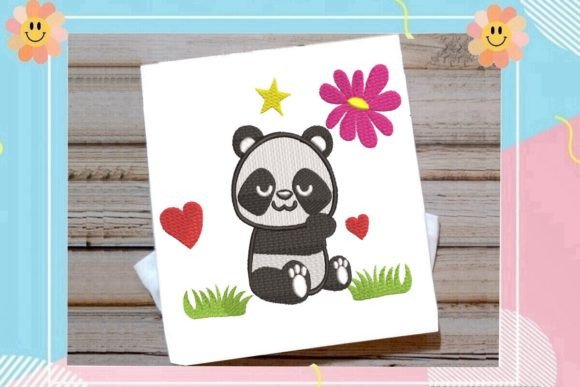
When I opened Adorable Panda Embroidery, what struck me wasn’t just the charm—it was how immediately usable it felt. A round-faced panda sits nestled in grass, paws resting gently, surrounded by tiny blossoms that don’t compete but complement. It’s not cutesy in a saccharine way; it’s warm, grounded, and quietly detailed—exactly the kind of machine embroidery design that reads as handmade without looking fussy. As a designer who’s stitched hundreds of baby and nursery pieces, I knew right away this wouldn’t get lost on a onesie or fade into the background of a linen tea towel.
A Real Project Test: Stitching It for a Custom Tote Bag Series
Last week, I used Adorable Panda Embroidery on a batch of organic cotton tote bags for a local boutique’s spring launch. The goal? A soft, gender-neutral gift option for new parents—something joyful but not overwhelming. I chose a 4” hoop size and paired it with medium-weight cutaway stabilizer. On the first run, the satin stitch around the panda’s face held beautifully, and the fill stitch in the grass created subtle texture without density overload. The flowers? Small—but legible. No skipped stitches, no thread nesting. That told me this embroidery file was digitized with real-world fabric behavior in mind—not just screen appeal.
Where It Shines (and Where to Pause)
Adorable Panda Embroidery works especially well on:
- Baby embroidery—onesies, burp cloths, and swaddle blankets—thanks to its compact shape and gentle scale;
- Nursery decor—pillow covers, wall hangings, and crib bumper alternatives—where its floral accents add quiet sophistication;
- Custom apparel like sweatshirt cuffs, apron pockets, or cap fronts—its centered composition avoids awkward cropping;
- Embroidered patch production—clean outer edges and balanced stitch density mean crisp heat-press or sew-on results;
- Holiday embroidery—think Easter baskets or baby’s first Christmas stocking—where whimsy feels intentional, not tacked on.
That said, I’d use it thoughtfully on:
- Thin or delicate fabrics—like silk charmeuse or lightweight rayon—where dense fill areas could cause puckering without extra stabilizing;
- Stretchy knits—t-shirts or raglan sleeves—where even moderate stitch density needs careful hooping and tear-away backing;
- Curved surfaces like structured caps—test placement first; the grass base may distort slightly if hooped too tightly;
- Dark fabric backgrounds—check contrast in your thread colors early; light cream or pale gray thread can disappear on navy or charcoal unless you adjust tone intentionally;
- Tiny hoop sizes under 3”—some flower details may compress or lose definition, so verify clarity at your target scale before committing to a production run.
What It Adds to Your Finished Product—Beyond Cuteness
This isn’t just decoration. Adorable Panda Embroidery elevates perceived value. Customers notice the care in the petal spacing, the slight variation in grass height, the way the panda’s eye is stitched—not printed or ironed on. That subtlety builds trust: it tells buyers they’re getting something considered, not copied. For Etsy sellers and small shop owners, that translates directly to fewer returns, more repeat orders, and stronger brand consistency across baby embroidery, holiday embroidery, and personalized gift lines.
I’ve watched shoppers pause longer over items featuring Adorable Panda Embroidery in craft fair booths—not because pandas are novel, but because the execution feels *intimate*. Like the maker looked at the fabric, then the design, then made a quiet choice about where the joy lives—in the curve of an ear, not just the subject itself.
Practical Designer Notes Before You Stitch
Before using Adorable Panda Embroidery commercially—or even gifting a finished product—here’s what I always do:
- Test on scrap fabric first, using the exact stabilizer and thread you’ll use in production;
- Check thread color contrast on both light and dark mockups—especially for Etsy listings where thumbnail visibility matters;
- Review stitch density visually in your embroidery software—if fill areas look overly tight, consider reducing density 5–10% for breathable fabrics;
- Confirm hoop size compatibility with your machine and project surface—don’t assume “standard” fits every cap or curved seam;
- Inspect small details at 200% zoom: are flower centers distinct? Does the panda’s nose read clearly at 3” wide?
- Try a black-and-white printable mockup—it reveals balance issues color sometimes hides;
- Use proper stabilizer: cutaway for knits, tear-away for stable wovens, and fusible + tear-away for lightweight linens;
- Verify licensing—if you’re selling finished items or bundling the digital embroidery file, confirm whether Adorable Panda Embroidery permits commercial embroidery use;
- Ask yourself: does this support the story of my craft business? For baby animals-themed collections or gentle nursery branding, yes—consistently.
Final Thought: A Design That Grows With Your Work
Adorable Panda Embroidery isn’t a one-season trend. It’s a reliable, emotionally resonant design asset—equally at home on a hand-stitched tea towel sold at a farmers’ market or a professionally digitized sweatshirt line for a boutique brand. It doesn’t shout. It invites. And in a crowded space of digital embroidery files, that quiet confidence is rare—and valuable. Whether you’re an embroidery designer refining your portfolio, an Etsy seller building seasonal collections, or a small shop owner curating meaningful handmade products, this design earns its place—not because it’s adorable, but because it’s thoughtful.