Be the Rainbow Embroidery
A Warm, Thoughtful Design That Fits Real Life — Not Just Hoops
As an embroidery designer who’s tested hundreds of machine embroidery designs for small shops and custom gift studios, I approached Be the Rainbow Embroidery with quiet curiosity — not hype. This isn’t a flashy, trend-chasing motif. It’s soft-spoken, emotionally grounded, and instantly recognizable as something people *want to give* — and keep.
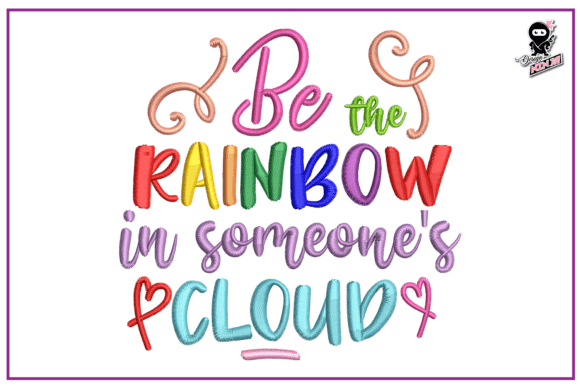
First impression? Sweet without being saccharine. Motivational without sounding like a corporate slogan. The phrase “Be the rainbow in someone’s cloud” lands with gentle sincerity — exactly the tone customers seek for baby embroidery, wedding gifts, or heartfelt keepsakes. Visually, it balances clean lettering with subtle curve and flow — not overly ornate, but clearly handmade in spirit. No clipart stiffness. No jagged edges. Just warmth, rhythm, and quiet confidence.
Where This Design Truly Shines — And Why Your Customers Will Notice
Be the Rainbow Embroidery is unusually versatile across product categories — especially for handmade sellers who juggle multiple lines. Here’s how it performs where it matters most:
- Baby embroidery: Perfect for organic cotton blankets, muslin swaddles, or linen nursery pillows. Its uplifting message pairs beautifully with soft pastels and neutral tones — no need for cutesy animals or rainbows-as-graphics. Parents love meaning over motif.
- Wedding gifts & family keepsakes: Stitch it onto linen napkins, monogrammed pillow covers, or framed wall art for newlyweds. It reads as timeless, not trendy — ideal for couples who value authenticity over cliché.
- Embroidered towel & kitchen decor: Works elegantly on flour sack towels, tea towels, and aprons — especially when paired with natural thread colors (oatmeal, slate, heather gray). Avoid ultra-thick terry; opt for smoother weaves for crisp lettering.
- Pillow covers & tote bags: Holds up beautifully on medium-weight canvas, cotton duck, or linen-blend fabrics. The line weight stays legible even at 4–5 inches wide — great for Etsy listings where visual clarity drives clicks.
- Nursery decor & craft fair products: Because it’s emotionally resonant yet minimalist, it photographs well in lifestyle flat lays — think wooden crib, folded blanket, soft lighting. That boosts buyer engagement before they even read the description.
Where to Pause — Practical Considerations for Real Production
Not every surface is equal — and Be the Rainbow Embroidery rewards thoughtful execution. Here’s where attention pays off:
- Small lettering: While legible at standard sizes (3.5–4.5"), avoid shrinking below 3" — fine details in the “a” and “g” may soften on dense fabric or with low-density stitching.
- Fabric texture matters: Highly textured towels, bouclé, or loosely woven linen can blur delicate curves. Test first. A lightweight cutaway stabilizer helps anchor the design without adding bulk.
- Stretchy baby clothes: Not recommended for onesies or knit bodysuits unless you’re using high-quality tear-away + topping and reducing stitch density. Better suited for stable cotton blankets or quilted items.
- Dark fabric: Always test thread contrast. Light ecru or pale sky blue often reads more warmly than stark white on charcoal or navy — and feels more intentional in a handmade product.
- Curved surfaces (like mugs or curved tote handles): Stick to flat panels. This is a linear, horizontal design — best centered on a stable field, not wrapped or contoured.
Why This Design Builds Trust — Before the First Stitch
In my work with Etsy sellers and boutique gift shops, I’ve watched how one thoughtful embroidery file can elevate perceived value — not just price, but emotional resonance. Be the Rainbow Embroidery does that quietly but consistently.
Customers scanning your shop don’t just see letters — they feel care. They imagine giving this to a friend recovering from illness, a new parent overwhelmed by joy and exhaustion, or a teacher who changed their child’s life. That emotional connection translates directly to fewer cart abandonments and more repeat buyers.
Photograph it well — on a folded blanket beside a mug, stitched onto a linen pillow in morning light — and watch how it lifts your entire product page. Buyers trust handmade quality when the design feels intentional, balanced, and human-scaled. This one does.
Your Pre-Stitch Checklist — Non-Negotiables
Before committing to customer orders, always:
- Run a test on scrap fabric matching your final product’s weight and weave.
- Compare thread color options side-by-side on both light and dark fabric mockups — don’t rely on screen previews alone.
- Confirm hoop size compatibility with your machine and intended placement (e.g., center chest vs. corner of a towel).
- Review stitch density: If it looks overly dense in your software preview, reduce fill density slightly — especially for lightweight cotton or baby items.
- Choose stabilizer based on fabric: Cutaway for knits or stretchy blends, tear-away for stable wovens, and lightweight fusible for delicate linens.
- Check all small details after stitching — especially the inner counters of “e”, “a”, and “o”. Trim stray threads gently.
- Verify commercial licensing terms before listing finished products for sale. As a digital embroidery file, Be the Rainbow Embroidery must be cleared for use in handmade goods sold online or at markets.
This isn’t just another House category embroidery file. It’s a quiet invitation — to comfort, to hope, to presence. When stitched thoughtfully onto a pillow cover, a baby blanket, or a wedding towel, Be the Rainbow Embroidery becomes more than decoration. It becomes a promise — one your customers will remember, and return for.