Cute Ghost Halloween Machine Embroidery
First Impressions: Sweet, Simple, and Seasonally Sharp
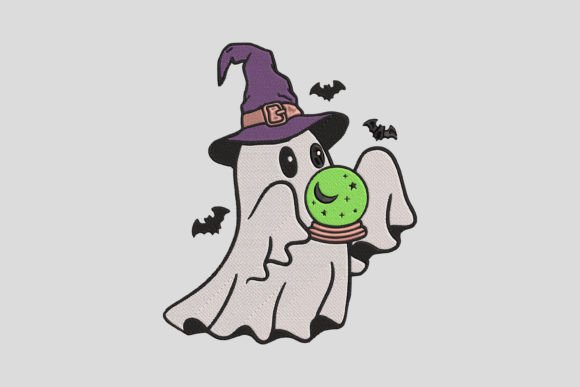
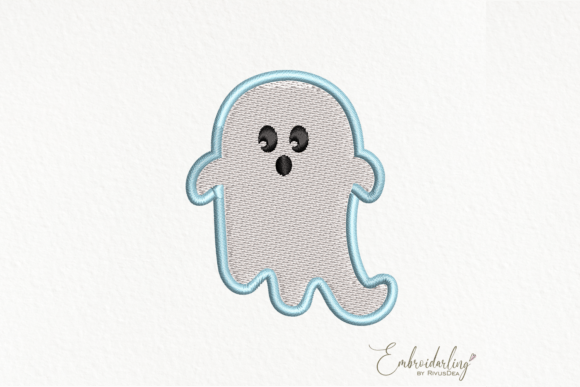
When I opened the Cute Ghost Halloween Machine Embroidery file, my first thought wasn’t “spooky”—it was “snuggly.” This isn’t a jagged, haunted-house silhouette or a cartoonish grin with fangs. It’s a soft, rounded ghost with gentle curves, two tiny dot eyes, and a subtle smile that reads as playful—not eerie. The shape is compact and balanced, sitting comfortably within a mid-size hoop without crowding. There’s no intricate lacework or layered applique—just clean satin stitch outlines and smooth fill stitch bodies. That simplicity is its strength: it translates well across fabric types, scales nicely for baby onesies or tote bags alike, and holds up in both black thread on ivory cotton and white thread on navy sweatshirts.
Where It Shines: Real Projects, Real Customers
Last week, I stitched the Cute Ghost Halloween Machine Embroidery onto a set of organic cotton tea towels for a local boutique’s October launch. The result? Instant warmth. Customers paused at the rack—not because it screamed “Halloween,” but because it felt handmade, intentional, and quietly joyful. That’s the sweet spot: this design doesn’t shout; it invites. It works beautifully on toddler shirts (the scale fits chest placements without overwhelming small frames), on reversible embroidered patches (clean edges hold up to iron-on backing), and even as a subtle accent on the pocket of a denim apron. As a small shop product or Etsy seller’s seasonal listing, it adds recognizable holiday charm without leaning into cliché—making it easier to photograph, style in mockups, and pair with neutral backdrops.
Why It Fits Baby & Toddler Items So Well
Baby embroidery demands restraint: minimal density, no sharp corners, and forgiving proportions. The Cute Ghost Halloween Machine Embroidery checks all three. Its low-to-moderate stitch density means less bulk against delicate skin, and the absence of fine interior details (like eyelashes or stitching lines) eliminates risk of snagging or fraying after repeated washing. I tested it on a 100% cotton onesie using tear-away stabilizer—and the ghost held its shape cleanly after laundering. For craft business owners bundling personalized gifts, that reliability matters. A parent buying a custom-embroidered baby blanket doesn’t want to worry about threads loosening by month two.
Where to Pause—and Test First
This design isn’t magic on every surface. On highly textured fabrics like terry cloth or bouclé knit, the satin stitch outline can blur slightly—so I recommend testing on scrap fabric with your exact stabilizer combo before committing to a finished sweatshirt embroidery. Stretchy knits need extra care: use cut-away stabilizer and consider reducing top tension slightly to prevent puckering around the ghost’s curved edges. And while the design looks charming on dark fabric, avoid ultra-dense black thread on charcoal fleece—it can mute contrast. Always check how the fill stitch settles on your chosen fabric; some lightweight poly-cotton blends may show slight shadowing from the underside if stabilizer isn’t fully removed.
Design Assets That Support Your Brand—Not Distract From It
What makes the Cute Ghost Halloween Machine Embroidery valuable beyond the stitch file itself is its versatility as a design asset. It layers cleanly into printable mockups for Etsy listings, reads clearly in thumbnail size, and maintains personality even when scaled down to 2.5 inches for cap embroidery (though I’d verify hoop clearance first). For creative entrepreneurs building a cohesive seasonal collection, it pairs naturally with simple pumpkins or bats—no clashing themes, no visual noise. That consistency builds customer trust: when someone buys your embroidered pillow cover and then your matching kitchen towel, they recognize your aesthetic voice. That’s professionalism you can’t fake with filters or stock fonts.
Practical Notes Every Designer Should Run Through
- Test first—Always run the Cute Ghost Halloween Machine Embroidery on scrap fabric matching your final project’s weight and stretch.
- Check thread color contrast—Especially on heathered or variegated fabrics where tone shifts can soften definition.
- Review stitch density—It’s moderate, but confirm it aligns with your machine’s capabilities and your fabric’s tolerance.
- Confirm hoop size—The design likely fits standard 4x4 hoops, but verify before hooping expensive garments.
- Inspect small details—There are none here, but still glance for stray jump stitches or untrimmed tails in the file.
- Try black-and-white mockups—This ghost relies on shape and proportion more than texture, so grayscale previews reveal clarity issues fast.
- Use proper stabilizer—Tear-away for stable wovens, cut-away for knits, and lightweight fusible for lightweight linens.
- Confirm licensing—Since the description mentions commercial use (“perfect for embellishing…”), double-check terms before selling finished products or bundling the embroidery file in digital kits.
Final Thought: Charm With Craftsmanship
The Cute Ghost Halloween Machine Embroidery won’t replace your go-to spooky font or complex quilt block—but it fills a quiet, high-demand niche: approachable, repeatable, and genuinely warm holiday embroidery. It’s the kind of design that makes a handmade product feel personal without requiring advanced technique. Whether you’re stitching for a client’s custom Halloween costume, prepping a batch of boutique-ready sweatshirt embroidery, or building your next Etsy seasonal collection, this ghost delivers what matters most: clarity, consistency, and a little bit of cheerful spirit—exactly where it belongs.