Festive Gingerbread Embroidery Design
First Impressions: Sweet, Simple, and Seasonally Solid
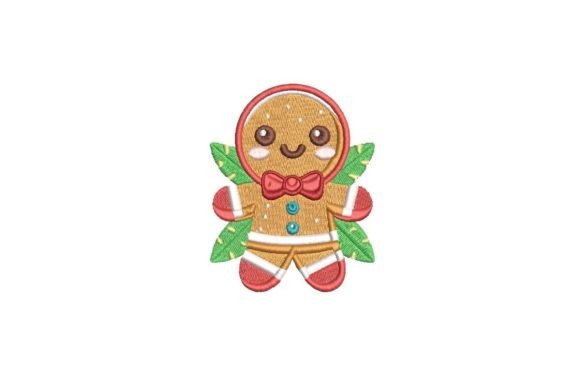
When I opened the Festive Gingerbread Embroidery Design file, what struck me first wasn’t just the charm—it was the clarity of intent. This isn’t a fussy, over-detailed gingerbread man trying to mimic illustration; it’s a confident, well-proportioned machine embroidery design built for real-world stitching. The pose is upright and friendly, arms slightly out—just enough personality to read at 2.5″, yet clean enough to scale up to 3.9″ without losing definition. No tiny buttons or eyelashes that’ll vanish in fill stitch. Just soft curves, balanced negative space, and intentional line weight. It feels like holiday warmth you can *trust* to stitch cleanly—not just look good on screen.
A Real-World Test: Embroidering It on a Linen Kitchen Towel
Last week, I used the Festive Gingerbread Embroidery Design on a set of heavyweight linen tea towels for a local boutique’s holiday launch. We chose the 3.2″ size—large enough to anchor the towel’s corner without overwhelming the fabric’s natural texture. The result? Crisp satin-stitched edges, smooth fill-stitched body, and zero puckering—even with moderate stitch density. Customers loved how it looked *handmade*, not digital: the slight variation in thread tension across the curved arms gave it gentle life, and the design’s open layout let the linen grain show through subtly. That’s the quiet strength of this embroidery file—it doesn’t fight the fabric; it partners with it.
Where It Shines (and Where to Pause)
The Festive Gingerbread Embroidery Design excels in applications where warmth and approachability matter most:
- Custom apparel: Works beautifully on midweight sweatshirts and structured tote bags—especially when placed on chest or upper back panels. The shape reads clearly even at a glance.
- Baby embroidery: Its rounded, non-angular silhouette feels gentle on onesies and burp cloths. Just avoid ultra-thin cottons unless you add light tear-away stabilizer underneath.
- Embroidered patch: Clean outer edge + minimal interior detail = excellent candidate for heat-applied or sew-on patches. Holds up well after washing.
- Holiday gifts & boutique branding: Stitches consistently across kitchen linens, pillow covers, and aprons—reinforcing brand cohesion without looking repetitive.
That said, proceed thoughtfully with:
- Stretchy fabrics like jersey knits—use cutaway stabilizer and test stitch density first. The design’s smooth curves can exaggerate distortion if stabilization is light.
- Dark fabric backgrounds—check contrast with your thread colors early. A cream or pale gold thread lifts nicely; black-on-black will disappear.
- Curved surfaces like caps—stick to the 2.5″–2.8″ sizes. Larger versions may pull or distort near the crown seam.
- Frequent-wash items like kids’ towels—confirm thread quality and lock stitches at start/end points. This design doesn’t have dense overlapping areas, but small corners (like the gingerbread man’s hands) benefit from secure trimming.
Design Integrity Meets Commercial Reality
As someone who sells embroidered goods and licenses digital embroidery files, I pay close attention to how a design affects perceived value—and the Festive Gingerbread Embroidery Design delivers quietly. It doesn’t scream “look at me,” but it earns attention through consistency: clean entry/exit points, logical stitch direction, and no unnecessary travel stitches. That translates directly to fewer trims, less thread breakage, and faster turnaround—critical for Etsy sellers juggling holiday orders or small shop owners producing limited-edition merchandise.
More importantly, it supports *customer trust*. When a buyer sees this on a personalized gift—say, stitched beside a child’s name on a holiday stocking—they don’t question the craftsmanship. They feel the care. That subtle professionalism elevates handmade product perception, especially next to busier or overly intricate designs that risk looking amateurish when scaled down.
Practical Designer Notes Before You Stitch
Before committing to your first production run—or uploading the Festive Gingerbread Embroidery Design to your digital shop—here’s what I do every time:
- Test on scrap fabric that matches your final project’s weight and stretch. Linen behaves differently than cotton poplin, and both differ from fleece-backed sweatshirt fabric.
- Check thread color contrast in natural light—not just on screen. A warm brown thread might blend into caramel fleece but pop on ivory terry cloth.
- Review stitch density visually in your editing software. Look for tight clusters near joints (e.g., where arms meet torso)—if present, reduce density slightly for better wash durability.
- Confirm hoop size compatibility. Since it fits a 4×4 hoop at all four sizes, double-check your machine’s actual usable area—some hoops have 0.1″ margins that shrink working space.
- Inspect small details at 200% zoom: are eyes or mouth lines defined as running stitch or satin? That affects visibility on textured fabrics.
- Test black-and-white mockups—they reveal balance issues invisible in color previews.
- Use proper stabilizer: medium-weight cutaway for stable fabrics, tear-away for tightly woven cottons, and fusible for lightweight layers.
- Verify licensing terms before selling finished items or reselling the digital embroidery file. If unclear, contact the creator—commercial use rights aren’t implied.
Final Thought: A Reliable Holiday Workhorse
The Festive Gingerbread Embroidery Design won’t replace your signature monogram or statement floral—but it fills a vital niche with quiet reliability. It’s the kind of embroidery file you reach for when you need warmth, speed, and consistent results: for last-minute personalized gifts, batch-produced boutique stock, or holiday-themed craft fair inventory. It respects your time, your machine, and your customer’s expectations. And in a season full of noise, that kind of thoughtful simplicity? That’s the real gift.