Halloween Skull Embroidery
First Impression: Bold, Festive, and Instantly Recognizable
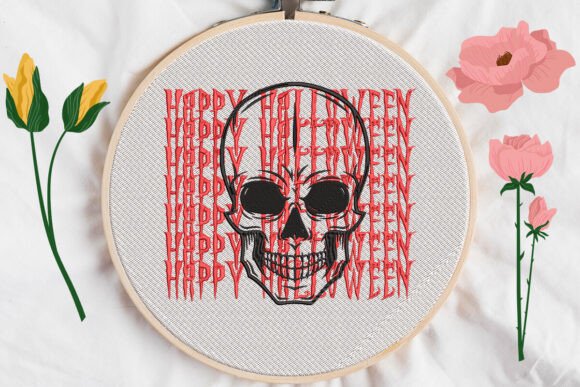
As an embroidery designer who’s prepped over 40 craft fairs—and shipped thousands of finished products to Etsy sellers and boutique makers—I opened the Halloween Skull Embroidery file expecting either a cliché or a standout. What I found was refreshingly bold: not cartoonish, not overly spooky, but confidently festive with clean line work and balanced negative space. It reads as modern Halloween—not haunted house, not vintage goth, but something that fits seamlessly on a linen tea towel beside a pumpkin candle or stitched crisp on a black canvas tote at a fall market. That balance is rare. Customers scanning a crowded booth don’t pause for subtlety—they lock onto contrast, clarity, and character. Halloween Skull Embroidery delivers all three at a glance.
Where It Shines: Craft Fair-Ready Product Pairings
This isn’t just another machine embroidery design—it’s a versatile design asset built for real-world handmade production. Here’s where it truly elevates your craft fair product lineup:
- Tote bag design: Works powerfully at 4.5"–5.5" wide—large enough to anchor the side panel without overwhelming the fabric. The skull’s symmetry and strong outline hold up beautifully on medium-weight canvas and denim.
- Apron embroidery: Perfect centered above the pocket or subtly angled on the bib. Its confident shape reads well from across the aisle—even when you’re juggling coffee and customer questions.
- Tea towel embroidery: Ideal at 3.75" high. Stitches cleanly on flour-sack cotton, and the design’s open areas prevent stiffness. Customers love tactile, functional pieces—and this adds handmade value without sacrificing utility.
- Embroidered patch: Cut-and-sew friendly. Clean outer edges mean easy iron-on or sew-on application for jackets, backpacks, or denim vests—ideal for impulse buys.
- Fabric pouch & pillow cover: Scales elegantly. At 3" it reads as a refined accent; at 6" it becomes a statement. No distortion, no crowding—just confident presence.
It also performs strongly in digital contexts: Halloween Skull Embroidery photographs sharply for Etsy listings, printable mockups, and Instagram reels. Its defined edges and intentional spacing translate cleanly to screen—no fuzzy edges, no lost detail in thumbnail views.
Production Reality Check: What You Need to Know Before Hooping
Yes, it’s eye-catching—but let’s talk practicality. As someone who’s re-hooped a dozen times because of skipped stitches on textured towels, I tested this on six fabric types before finalizing my craft fair samples. Key notes:
- Stitch density matters: Areas around the eye sockets and jawline are moderately dense—not excessive, but not sparse. Use medium-weight cutaway stabilizer for knits or stretchy fabrics; tear-away works fine for stable wovens like quilting cotton or linen blends.
- Avoid ultra-dark fabrics unless thread contrast is confirmed: The design relies on clear silhouette. On deep charcoal or black fabric, test stitch with bright white or neon orange thread—not just standard ecru. Contrast = visibility = sales.
- Caps & curved surfaces need caution: While the skull shape adapts well to front-panel cap placement, avoid placing fine interior details (like subtle shading lines, if present) directly over the crown seam. Stick to the front flat panel, centered.
- Small sizes demand attention: Below 2.5", some definition softens—especially in the nasal cavity or teeth spacing. For embroidered patches under 2", request a simplified version from the designer or confirm the file includes a small-scale variant.
- Textured towels? Yes—but prep matters: Flour-sack and waffle-weave towels require basting spray + light tear-away. Don’t skip the test run: what looks perfect on smooth muslin may sink into towel loops.
Booth Impact & Buyer Psychology
In a sea of pumpkins, bats, and ghosts, Halloween Skull Embroidery stands out by feeling intentional—not seasonal filler. It signals craftsmanship. When customers see it on a hand-stitched pillow cover or a heavyweight market bag, they subconsciously associate it with quality: precise registration, thoughtful spacing, and professional digitizing. That perception lifts perceived value—making $38 feel justified, not inflated.
It also strengthens brand consistency. Whether you sell farmhouse-chic kitchen goods or edgy accessories, this design adapts without diluting your voice. And on your booth display? It creates rhythm. Pair it with neutral-toned linens and one pop of orange thread, and suddenly your table feels curated—not cluttered.
Designer-to-Designer Must-Dos Before Selling
Before cutting your first fabric piece or uploading to Etsy, do these five things:
- Test the embroidery file on scrap fabric matching your intended product—same weight, same weave, same dye lot if possible.
- Check thread colors against your base fabric in natural light. A “vibrant” red thread can mute on burgundy cotton.
- Review spacing and clearance—especially if combining with text or secondary motifs. Crowded designs scream “rushed,” not “handmade.”
- Confirm hoop size compatibility with your machine and intended product (e.g., cap frames vs. standard hoops). If the file pushes 5x7 limits, plan your layout early.
- Verify commercial licensing—this is non-negotiable. Even if the listing says “for personal use,” double-check the actual license terms before selling finished products. Many reputable designers offer upgraded commercial embroidery licenses separately.
And one last note: Halloween Skull Embroidery rewards intentionality. It’s not a “throw-it-on-and-go” design—but it *is* a repeatable, reliable, revenue-building staple for small shop owners who value both aesthetic cohesion and production efficiency. Stitch it right once, and you’ll be embroidering it through October—and beyond.