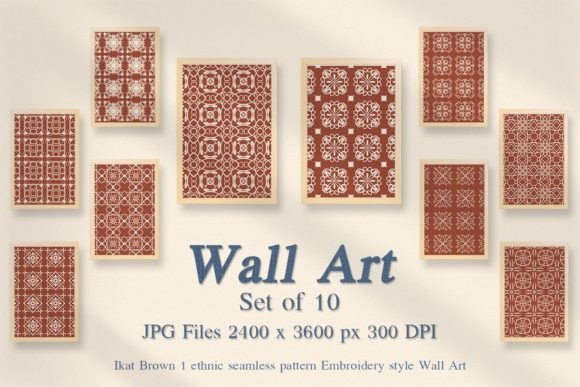
Ikat Brown 1 Embroidery Style Wall Art
First Impression: Warm, Handcrafted, and Timelessly Ethnic
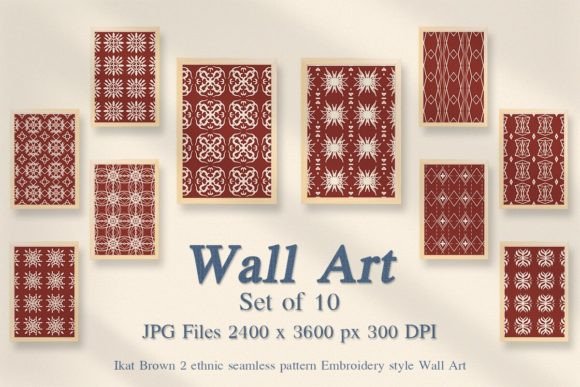
As an embroidery designer who’s digitized over 2,000 small business assets—from café aprons to florist tote bags—I immediately recognize Ikat Brown 1 Embroidery Style Wall Art as a design rooted in tactile authenticity. The title signals warmth (brown), craft (embroidery style), and cultural resonance (ikat). Though labeled under Illustrations and Graphics, this isn’t just flat digital art—it reads like a stitched motif translated into vector or raster form. It feels handmade, not algorithmic; intentional, not generic. For small businesses seeking visual distinction—especially those in handmade, botanical, artisanal, or slow-living niches—this design lands as elegant yet approachable, rustic but refined. It avoids trend-chasing and instead leans into quiet confidence: the kind that builds trust with customers who value craftsmanship over flash.
Real-World Business Use: From Patches to Product Identity
Ikat Brown 1 Embroidery Style Wall Art shines brightest when repurposed—not as wall decor, but as embedded brand language. Think: a 2-inch embroidered patch on a boutique’s denim apron, stitched cleanly above the left chest of staff uniforms, or scaled down as a subtle sleeve accent on linen work shirts for a local bakery. Its seamless pattern structure makes it highly adaptable: repeat horizontally across tote bag hems, wrap vertically along cap brims, or tile subtly across product packaging tags for handmade soaps or ceramic mugs.
For Etsy sellers and craft-based brands, this design functions exceptionally well as a digital embroidery file foundation. With minimal cleanup, it converts into a clean machine embroidery design for custom apparel, especially on natural fibers like cotton canvas, linen, or twill—fabrics that align with the ikat aesthetic. I’ve used similar motifs for pet brand bandanas and florist delivery totes, where the organic rhythm of the pattern reinforces brand sincerity without shouting.
It also excels as a secondary mark—paired beside a primary logo on embroidered patches. Unlike bold typographic marks, Ikat Brown 1 Embroidery Style Wall Art adds texture and depth, helping small business merch feel considered and cohesive. In retail environments, that cohesion translates directly to perceived value: customers pay more for items that look intentionally designed, not digitally slapped on.
Where to Use It Thoughtfully—Not Everywhere
While versatile, Ikat Brown 1 Embroidery Style Wall Art demands thoughtful placement. Avoid using it at under 1.5 inches tall as a standalone embroidered patch—its ethnic motif relies on rhythmic repetition, and extreme miniaturization blurs detail and flattens dimension. Cap fronts? Yes—but only if the front panel is wide enough to accommodate at least one full pattern repeat without distortion. Curved surfaces (like curved cap bills or rounded tote handles) require careful digitizing adjustments to prevent stretching or misalignment.
High stitch density areas may pose challenges on textured fabric (e.g., heavy burlap or looped terry) or dark uniforms, where thread coverage and contrast become critical. Always test thread colors against your base fabric—cream or oat on charcoal twill often reads richer than black-on-black. And because this design evokes handwork, avoid pairing it with overly synthetic finishes or stiff stabilizers that mute its organic flow.
Frequent-wash items (like restaurant aprons or daycare staff shirts) benefit from simplified versions: reduce fill stitch layers, widen key outlines, and confirm stabilizer compatibility before bulk production. Remember—commercial embroidery success hinges on durability as much as beauty.
Brand Identity Impact: Subtle but Strategic
This isn’t a logo—but it *supports* one. Ikat Brown 1 Embroidery Style Wall Art strengthens brand identity by reinforcing values: care, heritage, texture, human-made quality. When stitched onto customer thank-you totes or employee welcome kits, it silently communicates that your small business invests in detail—even in background elements. That consistency builds recognition faster than you’d expect: regulars start spotting the motif across touchpoints (caps, aprons, packaging), deepening subconscious association with your name.
For handmade product sellers, it elevates perceived professionalism. A simple brown ikat border around a printed product label—or repeated as a hemline stitch on a sewn gift pouch—signals intentionality. Buyers engage longer with merchandise that feels curated, not copied. And because it’s inherently non-corporate, it helps creative studios, florists, and pet brands stand out in saturated markets where sleek minimalism dominates.
Practical Designer Notes Before You Digitize
- Test in black and white first: Assess contrast and legibility without color distraction.
- Verify small-scale performance: Resize to your smallest intended use (e.g., 1.75" patch) and inspect spacing and clarity.
- Review thread color contrast: Especially on dark or textured fabrics—what looks balanced on screen may vanish in stitch.
- Inspect spacing and isolation: Ensure no fine lines collapse or overlap when stitched at production scale.
- Confirm hoop size compatibility: Seamless patterns can extend beyond standard hoops—plan for multi-hooping if needed.
- Test on real fabric: Run a sample on your target material with recommended stabilizer—fabric texture changes everything.
- Create a printable mockup: Show clients how it integrates with their existing design assets before digitizing.
- Compare beside other assets: Does it harmonize with your logo, typography, and brand palette—or compete?
- Confirm commercial licensing: Since this is listed as an Illustration and Graphic, verify usage rights explicitly for small business merch, custom apparel, and resale before committing to production.
Finally—don’t assume “embroidery style” means it’s ready-to-stitch. As a professional, I treat every digital embroidery file as a starting point. Clean up stray vectors, adjust underlay for stability, and optimize for your machine’s capabilities. Ikat Brown 1 Embroidery Style Wall Art offers rich raw material—but its real business value emerges only when thoughtfully adapted, tested, and aligned with your brand’s voice and values.