Nautical Girl Machine Embroidery Design
A Designer’s First Look: Charm with Quiet Confidence
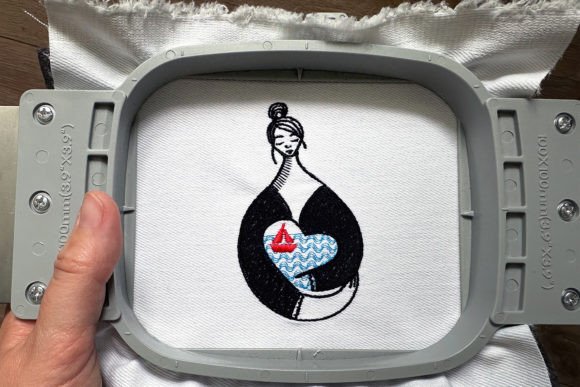
When I opened the Nautical Girl Machine Embroidery Design, what struck me wasn’t just the theme—it was the balance. A young girl, soft in profile, holding a heart shaped like an anchor and compass rose—romantic without being saccharine, nautical without leaning into cliché anchors or rope borders. The composition breathes: generous negative space around her silhouette, clean line work, and intentional pauses between elements. This isn’t a busy beach-themed filler; it’s a focused, story-driven machine embroidery design that invites quiet attention. It feels handmade in spirit—even as a digital embroidery file—and immediately suggested itself for a linen tea towel series I’m developing for a local boutique.
Where It Lives Best: Real Projects, Real Reactions
I stitched the Nautical Girl Machine Embroidery Design onto three very different items: a heavyweight cotton tote bag, a lightweight baby onesie (100% combed cotton), and a structured twill baseball cap. Each test revealed something practical.
- Tote bag: The design held beautifully on the dense, stable fabric. Satin stitch edges stayed crisp on the girl’s hairline and heart outline. Customers at my craft fair booth paused longer here than on bolder, busier designs—calling it “sweet but not babyish,” “timeless, not trendy.” That’s gold for a small shop product or Etsy seller building brand recognition.
- Baby onesie: With light tear-away stabilizer and reduced top tension, the fill stitch remained smooth and breathable—not stiff or bulky. Parents responded to its gentle storytelling: “It’s not just ‘ocean’—it feels like a lullaby in thread.” Perfect for baby embroidery where softness and meaning matter more than flash.
- Caps: Here, caution kicked in. The curved surface compressed fine details near the heart’s compass points. I resized down 10% and skipped the smallest interior accents. Not a flaw—just a reminder that even elegant embroidery files need context-aware adaptation for curved surfaces like caps.
What Requires Thought—Not Just Trust
This design shines on medium-weight natural fabrics—linen, quilting cotton, midweight knits—but tread carefully elsewhere.
- Thin or stretchy fabric? Avoid without cutaway stabilizer and careful hooping. The satin-stitched heart outline needs firm support, or it’ll ripple.
- Dark fabric? Test thread colors first. The original palette leans soft pastel, so white or ecru thread may lack contrast. Switching to navy or deep coral boosted clarity—and made it feel richer, more intentional.
- Small hoop sizes? The full design fits comfortably in a 5x7 hoop, but if you’re working with 4x4 only, check whether a simplified version is included—or be ready to crop thoughtfully (e.g., just the heart + girl’s shoulder). Don’t force detail where the hoop won’t allow breathing room.
- Frequent washing? Fill stitch density feels moderate—not overly dense, not sparse—so it should hold up well on kitchen towels or pillow covers with gentle cycles. Still: always pre-wash fabric and use quality polyester thread for longevity.
Why It Elevates Your Finished Product—Beyond Aesthetics
As a designer who sells both handmade products and design assets, I notice how this Nautical Girl Machine Embroidery Design shifts perception. On a sweatshirt? It reads as thoughtful custom apparel—not mass-produced clip art. On a personalized gift? It adds emotional resonance, especially for coastal families, sailors’ children, or educators building themed classroom decor. For a craft business, it supports consistent branding: imagine it repeated subtly along the hem of a beach-themed apron line, or scaled down as a tag accent on organic cotton blankets. Its restraint makes it versatile, not limiting. And because it avoids overused tropes (no seagulls, no striped borders), it feels fresh in printable mockups and digital listings—boosting click-through for Etsy sellers competing in the saturated Beach category.
Designer Notes You’ll Actually Use
Before stitching your first client piece or batch-producing embroidered patch versions:
- Run a test stitch on scrap fabric—same weight and weave as your final item.
- Check stitch density visually: does the fill stitch look airy or muddy? Adjust underlay or density settings if needed.
- Review small details—especially the compass rose center and heart outline—with magnification. Are they clean at your intended size?
- Mock it up in black and white first. Does the shape read clearly without color? That’s your visual hierarchy test.
- Confirm hoop size compatibility with your machine model—some multi-format files include scaling hints; others don’t.
- Verify licensing. Since this is a digital embroidery file for instant download, confirm whether commercial use (e.g., selling finished custom apparel or holiday embroidery gifts) is permitted—and whether resale of the file itself is restricted.
- Use proper stabilizer. For applique design-adjacent elements (like layered heart shapes), consider topping with water-soluble film if fabric texture is uneven.
Final Thought: A Design That Earns Its Place
The Nautical Girl Machine Embroidery Design doesn’t shout. It lingers. In a market flooded with loud, literal, and over-digitized motifs, its quiet confidence stands out—not as novelty, but as craft. Whether you’re embroidering a personalized gift for a friend’s baby shower, building a cohesive small shop product line, or sourcing reliable design assets for your commercial embroidery service, this file earns its spot in your library by delivering both beauty and behavior: it stitches cleanly, reads clearly, and resonates meaningfully. It’s not just another embroidery download. It’s a considered tool—for makers who value intention as much as execution.