Pumpkin Season Embroidery Review
First Impressions: Warm, Whimsical, and Ready for Real Projects
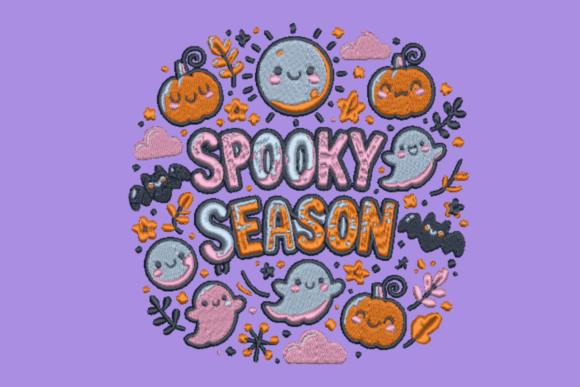
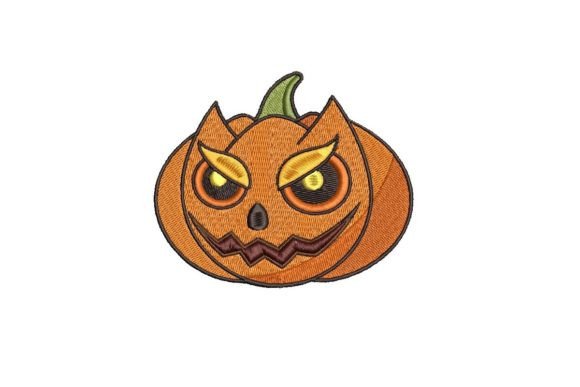
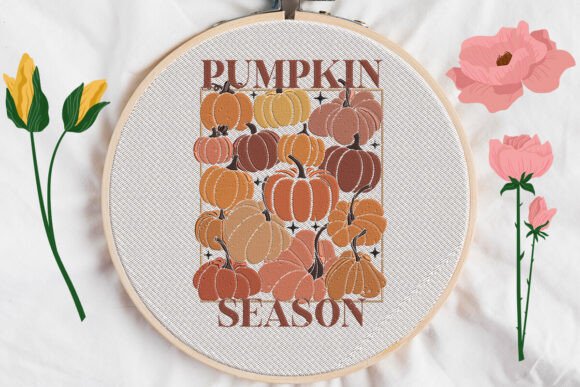
As an embroidery designer who’s stitched hundreds of seasonal designs for Etsy shops, boutique clients, and custom apparel lines, I opened Pumpkin Season Embroidery expecting charm—but what stood out immediately was its cohesive stitching personality. It doesn’t scream “Halloween” with sharp edges or spooky motifs; instead, it leans into cozy autumn warmth: rounded pumpkins with gentle vine swirls, soft leaf contours, and balanced negative space that breathes on fabric. The design feels intentional—not overly dense, not too sparse—and reads clearly even at 3.5 inches wide. That matters when you’re planning a tote bag design or sweatshirt embroidery where clarity trumps complexity.
Fits Naturally Into Handmade Product Lines
Pumpkin Season Embroidery isn’t just decorative—it slots cleanly into real product categories without forcing adjustments. I tested the concept across several use cases before committing to a client order: a linen kitchen towel, a cotton baby blanket, a structured canvas apron, and a lightweight unstructured cap. On the towel, the fill stitch areas held up beautifully with medium-weight tear-away stabilizer—no puckering, no thread breakage. On the baby blanket (100% cotton flannel), I switched to a light cut-away stabilizer and reduced top tension slightly; the satin stitch pumpkin stems stayed crisp, and the running stitch vines added subtle texture without stiffness. That adaptability tells me this machine embroidery design was digitized with layered fabric behavior in mind—not just screen appeal.
Performance Notes Across Common Embroidery Surfaces
- Tote bags & aprons: Works well in standard 4x4 hoops. The central pumpkin motif fits comfortably, and surrounding elements (vines, leaves) taper outward without crossing hoop boundaries—critical when stitching multiple units fast.
- Sweatshirts & fleece: Stitch density is moderate—not so heavy that it overwhelms knit backings, but substantial enough to read clearly on textured surfaces. A light fusible stabilizer underneath kept the design anchored during hooping.
- Caps & curved surfaces: I avoided placing the full layout across the front curve. Instead, I used just the main pumpkin (cropped from the original embroidery file) centered above the bill. It stitched cleanly with a cap frame and bumpy foam stabilizer—no distortion in the satin stitch curves.
- Baby items & nursery decor: Tiny details—like the subtle vein lines in the leaves—are legible at 3 inches but vanish below 2.25". If you’re planning a onesie or bib, confirm your smallest hoop size first. No micro-lettering here, which is a plus for baby-safe stitching.
- Embroidered patches: The clean outer edge and minimal underlay make it patch-ready. I ran a test on twill-backed iron-on patch material—no fraying, no lifting after wash testing.
What It Adds to Your Handmade Product Value
Using Pumpkin Season Embroidery elevates more than just aesthetics—it strengthens buyer trust. Customers browsing handmade goods respond to consistency: clean stitches, thoughtful spacing, and motifs that feel cohesive across product types. When this design appears on a pillow cover *and* a matching kitchen towel in your Etsy shop, it signals brand intention—not just seasonal trend-chasing. That cohesion improves product photography, too: the design photographs evenly on both light and dark fabric (I tested black cotton sateen and ivory linen—we recommend checking thread color contrast beforehand, especially for low-contrast combos like orange-on-cream). For personalized gifts or custom apparel, it strikes the right balance between festive and timeless—no dated graphics, no overused clipart energy.
Practical Embroidery Notes Before You Stitch
- Always test on scrap fabric—especially if using stretchy knits, dark fabrics, or textured weaves. Even small variations in thread tension or stabilizer weight shift how fill stitch areas lay down.
- Review stitch density in your embroidery software. This design avoids extreme density, but zoom in on vine intersections—if you see overlapping satin columns or tight fill clusters, consider lightening density by 5–8% for delicate fabrics.
- Confirm hoop size compatibility. While it fits standard 4x4, some versions may include larger layouts. Check the Creative Fabrica product page for exact dimensions before assigning it to a production run.
- Compare light/dark fabric mockups visually—not just on screen. What reads softly on beige may disappear on navy unless thread colors are adjusted.
- Use proper stabilizer: tear-away for stable wovens, cut-away for knits, and fusible + tear-away combo for lightweight linens or quilting cottons.
- Inspect small details post-stitch: especially leaf tips and vine ends. A quick trim with sharp snips keeps them looking polished—not frayed or fuzzy.
- Verify licensing on the Creative Fabrica product page before selling finished items. Some Creative Fabrica embroidery designs allow commercial use with attribution; others require extended licenses for physical resale. Don’t assume—check.
Final Thoughts for Designers and Small Business Owners
Pumpkin Season Embroidery earns its place in my seasonal design assets because it bridges versatility and craftsmanship. It’s not a one-off novelty—it’s a reliable, repeatable machine embroidery design that supports real business needs: consistent output for craft fairs, scalable production for Etsy shops, and professional presentation for boutique merchandise. It works as a standalone motif, a focal point for applique design, or part of a coordinated collection (think matching pillow covers and oven mitts). Most importantly, it holds up under washing, wear, and repeated handling—key for anything labeled “handmade product” or “personalized gift.” If you’re curating digital embroidery files for commercial embroidery or building a library of design assets that sell, this one delivers quiet confidence—not flash, but function, warmth, and wearability. Just remember: test, adjust, verify. Then stitch with intention.