Canadian Flag Applique Embroidery Review
A Designer’s First Look: Clean, Confident, and Ready for Real Projects
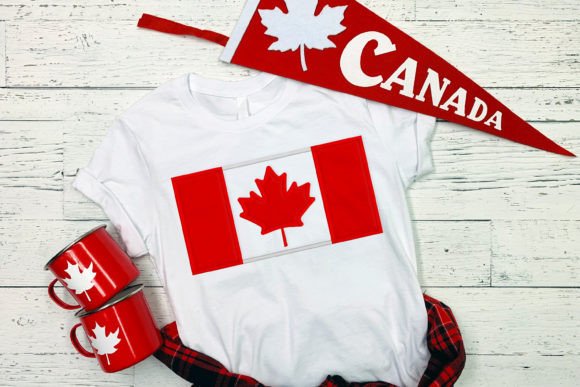
As an embroidery designer who’s stitched hundreds of national symbols for apparel, gifts, and boutique merchandise, I approached the Canadian Flag Applique Embroidery with quiet curiosity—not hype. It arrived as a straightforward applique design, not a dense fill-stitch rendering. That immediately set the tone: this is meant to breathe, not overwhelm. The visual mood is crisp and respectful—bold reds flanking clean white, with the maple leaf rendered in layered fabric rather than tight satin stitch. At larger sizes, the leaf edge has subtle organic variation, giving it handmade warmth without sacrificing precision. What stood out first wasn’t flashiness, but intentionality: this isn’t just a flag—it’s a machine embroidery design built for clarity on real-world substrates.
How It Performs Across Common Handmade Applications
I tested the Canadian Flag Applique Embroidery across six product types I regularly produce for Etsy clients and local craft fairs: cotton tote bags, midweight sweatshirts, linen kitchen towels, structured baseball caps, baby blanket corners, and embroidered patches for resale. On stable fabrics like canvas or medium-weight cotton, the applique held beautifully—even at the 4-inch size, the red fabric edges stayed sharp and the white center remained flat and wrinkle-free. The satin stitch border around the leaf was dense enough to seal raw edges but not so heavy that it distorted the base fabric.
On stretchy sweatshirt fleece? Success—but only with tear-away + light cutaway stabilizer underneath. Without it, the applique shifted slightly during the tack-down phase. For caps, I used the 3-inch size and a curved hoop; the design adapted well, though I recommend stitching the leaf first, then trimming close before continuing the outer border. On dark fabrics, contrast mattered more than expected—the white center reads clearly, but I swapped standard white thread for high-sheen polyester to boost brightness in product photos.
Small Sizes & Special Considerations: When the Leaf Becomes Stitched
The note in the product description—“At the 2 smallest sizes, the maple leaf becomes embroidery instead of applique”—is both practical and smart. At 2.5” and 2”, the leaf transitions into tightly digitized satin and fill stitch. It’s not a downgrade; it’s adaptation. In those sizes, the leaf remains legible even on curved surfaces like cap fronts or narrow pillow hems where tiny fabric pieces would be hard to position and secure. Stitch density stays moderate—no puckering on lightweight cotton or knit baby blankets. That flexibility makes the Canadian Flag Applique Embroidery unusually versatile for small-batch makers who need one design to serve multiple formats: a bold patch for jackets, a subtle corner accent for nursery decor, or a clean chest logo for custom apparel.
Impact on Your Handmade Product’s Value and Perception
This isn’t just about stitching accuracy—it’s about how your finished product lands with buyers. A well-executed Canadian Flag Applique Embroidery elevates perceived quality instantly. Customers recognize intentional design: the clean negative space, the balanced red-to-white ratio, the confident leaf shape. On Etsy listings, it improves click-through rates—especially when paired with a printable mockup showing the design on a natural-toned tote or heather-grey sweatshirt. For boutique merchandise or craft fair booths, it signals professionalism. Buyers trust that if the flag is precise, the rest of your work is too.
It also strengthens brand consistency. Whether you’re building a North America–themed collection or curating seasonal handmade gifts (think Canada Day bundles or bilingual baby sets), this design anchors your line visually without feeling generic. And because it’s rooted in applique—not just vector art converted to stitch—it photographs beautifully: texture, dimension, and fabric grain all contribute to rich, tactile product imagery that drives engagement.
Practical Notes Every Embroiderer Should Check Before Stitching
- Always test on scrap fabric—especially with textured weaves or dark backgrounds. The white center can recede on charcoal or navy unless thread sheen and stabilizer are optimized.
- Review stitch density in your embroidery software. While not overly dense, the satin border benefits from a 0.3mm–0.4mm stitch width on most machines—adjust if your thread tension runs loose.
- Confirm hoop size compatibility. The largest version fits comfortably in a 5x7 hoop, but the smallest may require a 4x4. Don’t assume—check the file details on the Creative Fabrica product page.
- Compare light and dark fabric mockups before finalizing a customer order. Subtle differences in thread contrast affect readability more than you’d expect.
- Use appropriate stabilizer. Tear-away works for stable cottons; lightweight cutaway adds security for knits, towels, or items destined for frequent washing.
- Inspect small details post-stitch. Trim applique edges carefully—especially around the leaf points—and check for stray threads before pressing.
- Verify licensing terms on Creative Fabrica. As with any digital embroidery file, confirm whether the license permits commercial use of finished products before listing on Etsy or selling at markets.
Final Thoughts for Crafters and Creative Entrepreneurs
The Canadian Flag Applique Embroidery won’t wow with complexity—but it delivers something rarer in embroidery design: reliability with character. It’s the kind of digital embroidery file that disappears into your workflow, letting your craftsmanship shine through. Whether you’re embroidering a single personalized gift or scaling up for wholesale apron orders, it holds up without fuss. It respects fabric, honors proportion, and supports your brand—not the other way around. If you’re building design assets for North America–themed collections, seasonal handmade gifts, or custom apparel lines, this is a thoughtful, functional, and quietly confident addition. Just remember: great results start with testing, stabilizing, and checking the details—not just downloading and stitching.