Sleeping Cat Embroidery Patch Grey
A Designer’s First Look: Charm, Craft, and Quiet Confidence
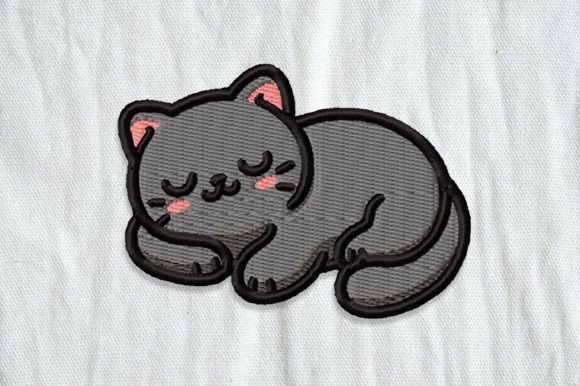
As an embroidery designer who’s stitched thousands of personalized gifts—from baby blankets to wedding keepsakes—I opened the Sleeping Cat Embroidery Patch Grey with quiet anticipation. What greeted me wasn’t just a design, but a mood: soft, unhurried, tender. The cat is curled in perfect repose—paws tucked, tail wrapped, eyes gently closed—radiating calm rather than cuteness overload. It feels handmade without looking rustic, elegant without being stiff, and timeless without leaning into vintage cliché. This isn’t a cartoon; it’s a whisper of companionship. For gift makers, that emotional resonance is gold.
Where This Patch Truly Shines
The Sleeping Cat Embroidery Patch Grey excels where warmth and intention meet function. Think: a monogrammed baby blanket with the patch nestled beside a tiny embroidered name—soft, soothing, deeply personal. Or a linen kitchen towel for a new couple, where the sleeping cat adds quiet romance next to their wedding date. It’s equally at home on a minimalist pillow cover for nursery decor, a cotton tote for a cat-loving teacher, or even a custom apron for a baker who starts each morning with her feline muse curled nearby.
- Baby embroidery: Its gentle scale and low-contrast grey thread palette make it ideal for delicate fabrics—no harsh edges, no visual overwhelm for newborns’ sensitive eyes.
- Wedding gift: Pair it with subtle metallic thread accents (like soft silver or champagne) on ivory linen for a keepsake pillow or handkerchief—elegant, intimate, and quietly meaningful.
- Etsy seller & small shop product: The design photographs beautifully on neutral backdrops, supports clean branding, and invites storytelling in listings (“A little calm, stitched just for you”).
- Custom embroidery preview: When sending digital mockups to clients, this patch reads instantly as thoughtful—not generic. It builds trust before the first stitch.
Smart Placement Matters: Know Your Limits
Not every surface welcomes this design equally. As a working embroiderer, I test rigorously—and here’s what I’ve learned about where to use the Sleeping Cat Embroidery Patch Grey with care:
- Small lettering or fine details? Avoid adding tiny text inside or beside the cat silhouette unless your machine handles ultra-fine stitching reliably. The charm lies in its simplicity—don’t crowd it.
- Textured fabric? On heavy terry cloth towels or nubby bouclé blankets, stitch density matters. Run a test on scrap first—the design may need slightly reduced density to avoid puckering.
- Stretchy baby clothes? Not recommended unless fused with high-quality tear-away + cut-away stabilizer combo. The curve of the cat’s back demands stability.
- Curved surfaces (like caps or mugs)? Stick to flat or gently contoured areas. The sleeping pose doesn’t adapt well to severe curvature without distortion.
- Dark fabric? Grey thread on charcoal or navy can fade visually. Consider switching to heather grey or charcoal thread for better contrast—or add a subtle satin-stitch outline.
- Frequent washing? Use high-quality polyester thread and secure backing. Confirm the design’s stitch density supports durability—overly dense fills may crack over time.
Why Customers Choose—and Keep—This Kind of Personalized Gift
Gift buyers don’t just buy embroidery—they buy feeling. The Sleeping Cat Embroidery Patch Grey taps into universal emotions: safety, rest, quiet love. That translates directly to perceived value. A customer paying $45 for a custom embroidered towel isn’t just buying linen—they’re investing in a daily moment of peace, symbolized by that softly sleeping cat. For handmade sellers, that emotional hook builds loyalty, encourages repeat orders, and fuels word-of-mouth. In product photography, it performs exceptionally well: soft shadows, clear outlines, and a natural focal point that draws the eye without shouting.
Practical Embroidery Notes You Can’t Skip
Before stitching your first client order, treat the Sleeping Cat Embroidery Patch Grey like any professional machine embroidery design:
- Always run a test on scrap fabric matching your final product’s weight and weave.
- Compare thread color contrast on both light and dark fabric swatches—grey isn’t always neutral.
- Confirm hoop size compatibility—some versions may require a 4x4” or larger hoop; verify before digitizing or resizing.
- Review stitch density: too dense on lightweight fabric = stiffness; too sparse on towels = lack of definition.
- Choose stabilizer intentionally—cut-away for knits, tear-away for stable wovens, fusible for patches meant to be ironed on.
- Inspect small details post-stitch: eyelids, paw curves, and tail tip should read clearly—not blurred or lost in fill.
- Double-check commercial licensing terms. If selling finished products, ensure your embroidery file permits commercial embroidery use—not just personal projects.
Final Thoughts for Makers Who Stitch With Purpose
The Sleeping Cat Embroidery Patch Grey isn’t flashy—but that’s its strength. In a market crowded with bold fonts and busy motifs, it offers stillness. It fits seamlessly into baby embroidery collections, wedding gift bundles, and curated Etsy shops that prioritize soul over saturation. For craft fair vendors, it’s a conversation starter. For digital product sellers, it’s a versatile anchor design—easy to pair with fonts, borders, or seasonal elements without losing identity.
Most importantly, it reminds us why people seek out handmade: not for perfection, but for presence. When a new parent wraps their child in a blanket stitched with this sleeping cat, they’re not just covering—they’re comforting. And that’s the kind of detail that turns a simple patch into a lifelong keepsake.